


|
Getting your Trinity Audio player ready...
|
In the quiet moments between campaign cycles, it can feel like the needle barely moves. For many LGBTQ+ Wisconsinites, politics has long felt like a cold spectator sport where we’re told to cheer, vote, and hope for scraps. But 2026 could be different. According to former state legislator JoCasta Zamarripa, the next election isn’t just another round. It’s a rare, historic chance to shift the balance of power in Wisconsin—and in doing so, reshape what safety, equity, and belonging can look like for marginalized communities.
That kind of shift doesn’t come around often.
For the first time in more than a decade, Democrats have a viable path to winning not just the Governor’s seat, but a majority in the Senate—and possibly even the Assembly. If that happens, Wisconsin could go from gridlocked and defensive to proactive and protective. And that, for those of us who have spent the past several years fighting for our rights in a hostile climate, could mean something we haven’t dared to imagine in a long time: relief.
What’s at Stake in Wisconsin
Wisconsin has been under a Republican-controlled legislature for 15 years. This has resulted in repeated legislative attempts to undermine LGBTQ+ rights, reproductive access, fair elections, and immigrant protections. Even with a Democratic governor like Tony Evers at the helm, progress has been slow and defensive, with Evers vetoing anti-trans bills and protecting fair maps rather than advancing expansive protections.
But 2026 could mark a turning point. With Governor Evers retiring, the field is wide open. Current Lieutenant Governor Sara Rodriguez is a “Pro-Equality Elected Official” endorsed by Fair Wisconsin, a political action committee committed to advancing and achieving equality for LGBTQ+ Wisconsinites. Democratic candidates like Francesca Hong, Kelda Roys, and Missy Hughes are stepping forward with bold, progressive agendas. Kelda Roys, a longtime advocate for LGBTQ+ rights and a member of the Legislative LGBTQ+ caucus, has a track record of standing with marginalized communities. Francesca Hong has included LGBTQ+ protections in her platform, though it is not a primary focus.
Missy Hughes, Ryan Strnad, Brett Hulsey, and David Crowley do not currently mention LGBTQ+ rights in their public-facing campaign platforms. While this doesn’t confirm opposition, it leaves a significant gap in understanding how they would advocate (or not) for our communities.
One of the most exciting voices to emerge is Dina Nina Martinez-Rutherford, a transgender woman and elected member of the Madison Common Council who is now running for Wisconsin’s 76th Assembly District. In her own words:
“Now more than ever, transgender representation is essential in the face of growing attacks on LGBTQ+ Wisconsinites—attacks on our health care, humanity, and fundamental freedoms. Queer and trans youth need to know that someone is inside the State Capitol who understands them and will fight for them.
“With fair maps in place, we have the ability to elect a legislature that will actually advance LGBTQ+ equality instead of just playing defense and blocking harmful bills.”
Meanwhile, on the Republican side, U.S. Rep. Tom Tiffany is widely considered a frontrunner. Tiffany voted against the Respect for Marriage Act and has publicly mischaracterized the Biden administration’s Title IX policies by falsely claiming they allow transgender women to play women’s sports, a move that plays into harmful narratives about trans people. While his official platform avoids mention of LGBTQ+ rights, his voting record and public comments reflect a consistent pattern of opposition.
Should Republicans win both houses and the governorship, advocates like Zamarripa warn that marriage equality could be “on the chopping block.”
Under the Trump administration, LGBTQ+ rights were systematically undermined by executive actions that dismantled anti-discrimination protections in health care, education, housing, and more. According to a comprehensive overview by the Kaiser Family Foundation, the rollback of protections under Trump’s Department of Health and Human Services included allowing healthcare providers to refuse treatment to LGBTQ+ people on religious grounds. In education, the rescinding of Title IX guidance for transgender students created an environment where discrimination could flourish unchecked. The impact of these actions was far-reaching, touching everything from access to emergency services to long-term mental health and stability.
These aren’t just policy shifts; they’re survival issues for our community.
Why 2026 Feels Different
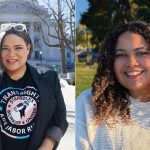
Zamarripa, the first out LGBTQ+ Latina elected to Wisconsin’s state legislature, and now a candidate for Secretary of State, sees 2026 as a genuine inflection point. “We have a chance to pick up a majority in the Senate,” she told me. “And maybe even in the Assembly.”
She’s not just hopeful, she’s strategic. With fair maps now in place thanks to the efforts of Gov. Evers and advocacy groups, the playing field is no longer tilted by excessive gerrymandering. That means voter turnout could truly reflect the will of the people, many of whom support LGBTQ+ rights, reproductive freedom, and equitable economic policy.
If Democrats win a trifecta—controlling the governorship and both houses—Zamarripa says we could finally move from defense to progress. That could include securing marriage equality in state law, restoring reproductive rights, and enacting protections for LGBTQ+ youth and families that go beyond simply blocking harmful bills.
She also shared concerns about anti-immigrant legislation being floated in the Capitol—including efforts to force local sheriffs to act as ICE agents under threat of losing funding. And she emphasized that despite GOP attempts to strip power from constitutional offices like hers, voters have repeatedly rejected those changes.
As she told me, “The Republicans have chosen to prioritize manufactured outrage over the real urgent needs of working families here in Wisconsin.”
This is the kind of shift that could bring tangible, everyday safety to people’s lives. For those of us who live in this state yearround—working, raising families, running businesses, showing up for our communities—the prospect of not having to live in fight-or-flight all the time is no small thing.
If you want to understand how chronic political hostility impacts our bodies and our sense of safety, I invite you to read my recent piece in Our Lives about the toll of political anxiety: “Thriving in the Age of Fear: How to Protect Your Joy While Staying Informed.”
A Legacy Worth Defending
It’s important to remember that Wisconsin was once a national leader in LGBTQ+ rights. In 1982, our state became the first in the nation to pass a gay rights law prohibiting discrimination based on sexual orientation in employment, housing, credit, and public accommodations. That legacy matters. And for those fighting to expand it, the work is personal.
Zamarripa co-authored Wisconsin’s first “Equality Agenda,” a package of bills that aimed to expand and codify rights and protections for LGBTQ+ residents. She also helped pass the state’s first Pride Month resolution, even if she was only allowed to do so on the condition that she not speak about it publicly. That kind of political compromise is a painful reminder of how often LGBTQ+ recognition in Wisconsin still comes with strings attached.
What can you do?
You don’t have to be a policy wonk or burn yourself out to make a difference, you can:
• Get to know the candidates in your district,
• Ask candidates how they plan to protect LGBTQ+ rights and marginalized communities,
• Support campaigns with time, money, or amplification,
• Stay engaged with local and state-level races,
• Help friends and family check their voter registration.
If you’re discouraged or overwhelmed, you’re not alone. But there is real, credible hope that this election could bring meaningful, lasting change. Especially if we show up like we did for the Supreme Court race that elected Susan M. Crawford in a landslide.
As Dina Nina Martinez-Rutherford put it: “The stakes of the 2026 midterms could not be higher for our democracy and our civil rights.”
This is our chance to make Wisconsin safer, more inclusive, and more just. Let’s take it.












0 Comments