


|
Getting your Trinity Audio player ready...
|
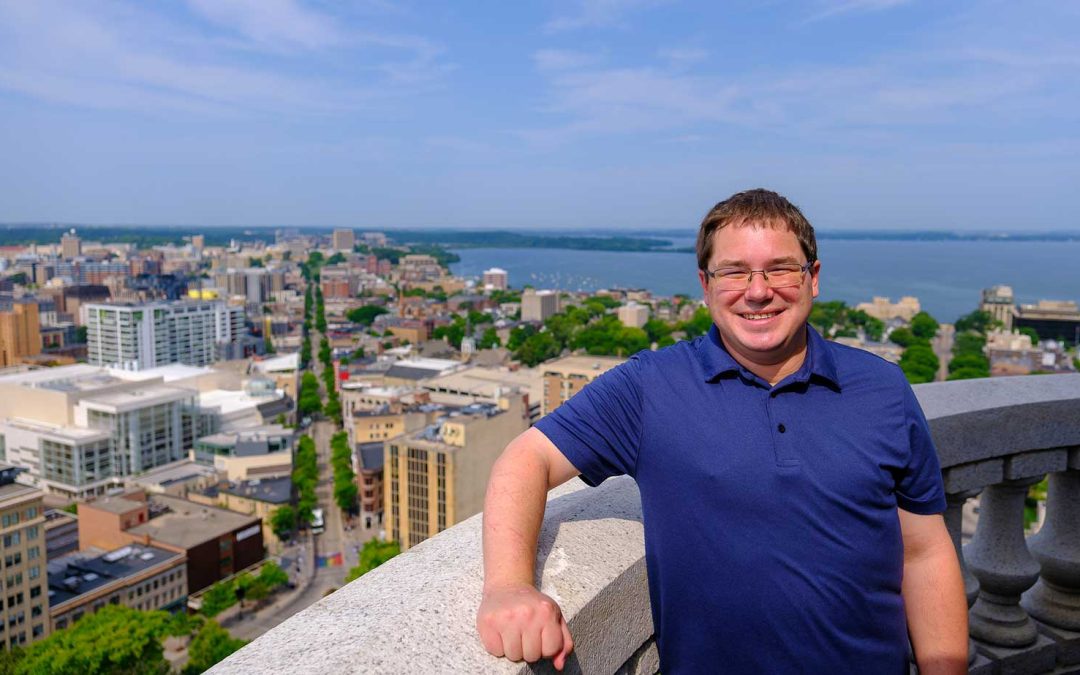
Growing up in Southern California, Dennis Jolley did not know what he wanted to be when he grew up. That is because the healthcare roles he’s held throughout his career did not exist back then.
Then again, he never thought he’d be living in Wisconsin, either.
“I will be honest: Growing up in California, I had a West Coast bias. I’d never even considered the Midwest as an option. I had no idea what to expect. And guess what? I love Madison. It is the easiest place I have ever lived in my life. It’s the easiest place to make friends—especially in the LGBTQ community—and everyone has been so welcoming.”
Growing Up
While in college, Dennis double majored in political science and behavioral science and health.
“Today, they’d probably call it population health,” said Dennis. “My instructors introduced me to the concept of ‘social determinants of health,’ which are the five non-medical factors that shape healthcare outcomes. The World Health Organization, the Centers for Disease Control, and other public health organizations track these areas to set goals, create policy, and lead change.”
After graduating, Dennis worked at the Surgeon General’s office in Washington D.C., which cemented his interest in public health. This inspired him to pursue a master’s degree in social epidemiology, which evaluates the socioeconomic factors that influence disease prevalence within individuals, communities, and populations. He was able to put his knowledge into practice at a non-governmental organization that funded interventional health care for women and children worldwide.



“This was a life-changing experience,” said Dennis. “I was able to see what health care meant for developing communities in Asia, Africa, and South America. It was a very interesting chance to study how and why disease impacts different populations. What are they doing differently? Is it their habits? Is it their diet? Is it the quality of the food, air, and water in their area?”
“In the United States, we think of health care as going to the doctor or hospital,” said Dennis. “But the truth of the matter is that most of our health and wellness is determined by our interactions with our environment. Where we grow up, and what is available to us, has a tremendous impact on our entire lifespan. This experience taught me that socioeconomic status, education status, and our cultural differences should always be considered in the design and delivery of care.”
Career Path
Traveling the world was a wonderful experience, but it was also challenging for a young adult just starting his career. Dennis returned to the United States and took a teaching job.
“While teaching, I saw the connection between what people heard, what people retained, and what people acted on,” said Dennis. “For example, we’ve known for over 50 years that smoking is bad for you, and while smoking rates have declined dramatically, some people continue to smoke. Why is it that health care access and knowledge did not influence behavior changes for those people?”
Dennis pursued a master’s degree in teaching and learning theory to help him answer that question. After completing his program, he joined the University of Utah Hospital in his first health care strategy role.
“I’m often asked what a health care strategist does,” said Dennis, “and here is how I explain it. Think of us as the futurists. The strategist plans what the future looks like for the healthcare system. We focus on the population that the health system serves and assess the unique health and medical needs of that community. We create long-term plans to bridge the gaps between what is and what should be.”
After nine years with the University of Utah, Dennis joined Gillette Children’s Hospital in the Twin Cities in 2014. As the chief strategy officer, he was responsible for clinical program design, innovation process, partnership development, and market analysis functions.
And then he got a call from UW Health.
“I was absolutely interested,” said Dennis. “The UW Health system has an amazing national reputation, and I had known providers who attended medical school, training, or conferences here. I really wanted to get back into academic medicine, so I raised my hand when I heard about the job. I got lucky, and here I am! We moved here in May, 2022.”
Leading Change in Wisconsin
Dennis joined UW Health as the system vice president of strategy and planning. He was given a blank canvas to rebuild the strategy development process from scratch. He developed a strategic playbook for the future of the organization, and now he is leading the implementation of a system-wide portfolio.
And he is anchoring the future in health care access and equity.
“When I worked overseas, I was hyper aware of how access to health care transformed lives,” said Dennis. “And yet, we see those same inequities here in the United States, and here in Wisconsin. This is a universal problem. When people do not have equal access to the things that make us healthy, whether it be good food or clean water or quality care, there is inequity and injustice. There are real issues with how we fund health care in the United States. Care deserts, service reductions, healthcare costs, and insurance disparities compound the problem.”
“The cost of health care is a real problem in the United States,” said Dennis, “and that just adds to the inequity. One of our strategic priorities is around value creation: How can we deliver care at a lower cost more efficiently?”
“I’d like to see any person who needs care to be able to get it quickly, easily, and at a price that is affordable to them,” said Dennis. “We want people to be able to get that immunization, fix that painful tooth, get the ultrasound, go to therapy, just find out what is going on. These moments have a huge impact on overall health and wellbeing, but they’re out of reach for too many people.”
“We cannot solve these problems overnight, but at UW Health, we are very cognizant of our responsibility to try to improve health care accessibility for everyone in the state. It is not going to be an easy fix, in fact, it is a big lift. But it is a problem we are really, truly, committed to solving. And I am proud of the organization for making healthcare equity and access to care our top priorities.”
“One of the reasons I like academic medicine is the nonprofit mission of advancing health, science, and knowledge,” said Dennis. “It is not about profit. It is about making the community stronger.”
Dennis sees Wisconsin’s geographic diversity as a strength and an opportunity. Health care access varies between urban and rural communities, and even more so since the pandemic.
“Rural hospitals are having a harder and harder time getting healthcare professionals to live and work there,” said Dennis. “During the pandemic, services and hours were reduced at many facilities, and it is harder for people to find quality care close to home. That is a big, big problem. We are doing what we can to increase virtual care, telemedicine, and digital appointments, but we are also supporting local community hospitals at the same time.”
Transforming LGBTQ Health
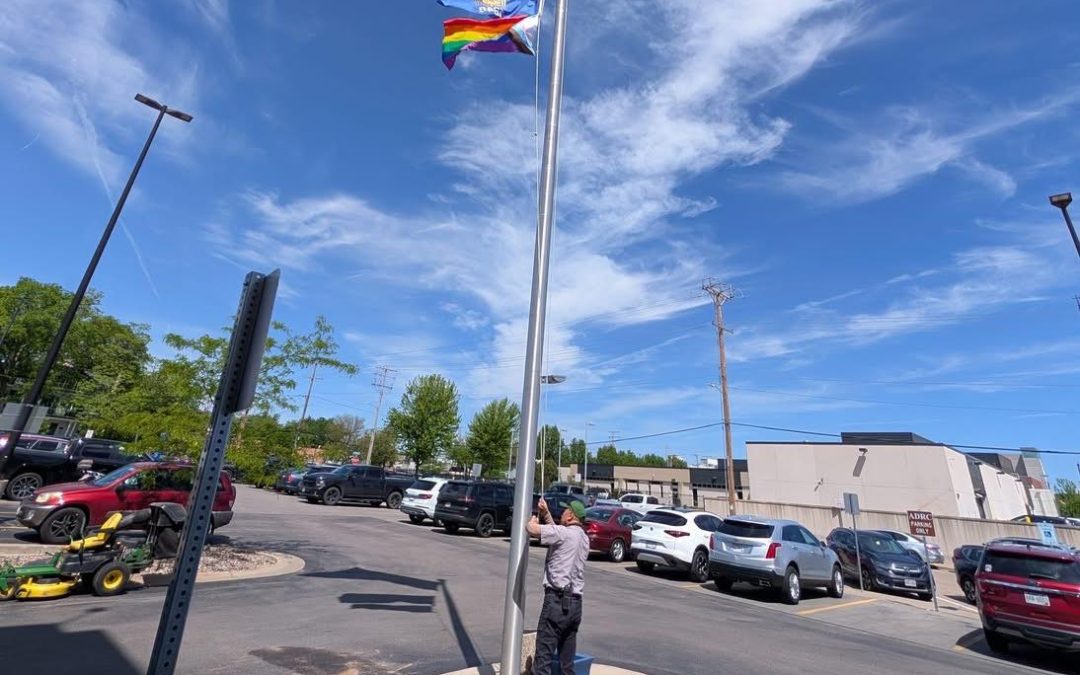
Dennis is proud of UW Health’s commitment to diversity, equity, and inclusion. He’s served on the Board of Governors for the Human Rights Campaign for eight years.
“I’ve been able to get involved with a number of local organizations,” said Dennis, “and on a personal level, I am supportive of Fair Wisconsin. Their support of equality-minded candidates across the state is so essential. They are doing some really great work, and hopefully we’ll see it pay off here in the near future. I am inspired by the work of Access Community Health Centers (ACHC), who support underserved and uninsured patients here in Dane County. Some of these populations do not necessarily trust doctors who do not look like them, or speak their language, or understand their unique challenges. ACHC does a really, really great job of getting everyone the care they need.”
“Culturally competent care is critical for LGBTQ people,” said Dennis, “because you need to be able to talk to your doctor about your health concerns, no matter who you are. Everyone deserves healthcare providers who can and will hear you, understand you, and make you feel comfortable and confident. This experience is as important to us as it is to our patients. Coming out is never easy, and you should never have to worry about coming out to your provider.”
“We are seeing a huge need for behavioral health support, especially for LGBTQ youth,” said Dennis. “But mental health support is also needed for older individuals, who may be aging alone without someone to help them with their health concerns.”
“Transgender health is a top priority for us,” said Dennis. “It is tragic how the trans community and their healthcare needs have been weaponized. UW Health has a very strong gender services program that provides outstanding support to trans folks at every step of their journey. However, we get a lot of negative attention for this service. Radio hosts have called us out on the radio, and our providers have been threatened. It is disappointing, it is heartbreaking, and it is wrong. And to think, all of this, simply for giving care to patients in need.”
“That is another reason I am proud to work at UW Health. We are absolutely, unapologetically, committed to providing those healthcare services. We are standing up and saying these medical needs are just as legitimate as everyone else’s. I am thankful there are providers who are willing to stand up and support this service.”
The Wisconsin healthcare landscape has changed a lot in recent years, with many local systems merging with regional and national partners. Is hometown care still important?
“One hundred percent in my opinion,” said Dennis. “That is not to say that a large system cannot support a small town community. But I do not think it is necessarily intuitive. Over the last decade, the motto has been ‘bigger is better,’ and mergers and acquisitions have been rampant. These decisions often lead to bigger, but not better. Systems become disconnected from their communities and make decisions that do not always put those communities’ needs first.”
“Although UW Health can feel very Madison-centric, our focus extends beyond Madison to independent regional hospitals throughout the state and in northern Illinois. We want to help them provide the best care possible to their patients, because they know their patients best.”
Wisconsin Proud
Dennis and his husband Brent have been together for 18 years. The couple will celebrate their 10th wedding anniversary in December.
“I’m surprised he’s put up with me that long,” laughed Dennis.
Since moving to the Midwest, they have taken a deep dive into local experiences, including restaurants, dive bars, art fairs, day trips to Milwaukee, and concerts on the Capitol Square. Their next destinations will be Green Bay and Door County.
“The first time we went to the Square, we were meeting a friend of a friend. He said, ‘find the gays under the oak tree,’” said Dennis. “Sounds easy, right? The Capitol Square is only so big. But there’s more than one oak tree, and more than one group of gay people!”
“Any complaints I have about Madison are very much first-world problems. It’s a great town. Wisconsin winters are tough for a Californian, but spring, summer, and fall more than make up for it.”
What has been his biggest surprise about Wisconsin?
“You should not print this, but I think the Wisconsin Old Fashioned is kind of an abomination,” joked Dennis. “I am more of a purist when it comes to what an Old Fashioned should be. I mean, mashing up all the stuff in the glass, and adding soda to it? What are you doing?”










0 Comments