

|
Getting your Trinity Audio player ready...
|
The Equal Curriculum: The Student and Educator Guide to LGBTQ Health is a first-of-its-kind textbook. It marks a revolutionary effort to reform medical education nationally by providing a comprehensive, high-quality resource to serve as a foundation for lesbian, gay, bisexual, transgender, and queer (LGBTQ) health education across multiple disciplines. Addressing the decades-long unequal weight of medical education generally offered about the care of LGBTQ people, The Equal Curriculum was created to advance clinicians’ competencies in optimizing the health of LGBTQ people. This textbook is designed to be integrated into health sciences curricula and offers pointed strategies to evaluate the integration of LGBTQ health topics.
What inspired the writing of The Equal Curriculum?
The need seemed obvious. As a year 2 medical student, I went to the conference for GLMA: Health Professionals Advancing LGBTQ Equality and learned that efforts in schools across the country were often student-driven and duplicative. People were doing great work, but there was nothing to fill the niche. At the same time, a survey of medical schools found that minimal class time was put toward LGBTQ health, and coverage of topics was spotty. Some students, including me, assembled the content experts and the senior editors to write the text. The rest is history.




What’s special about The book?
It’s for health professions students and based on standards proposed by education experts. It is the only book for that niche so far. It fits into real-world training sequences. The project brought together dozens of contributors from across the country. What’s surprised me is that people in wider-ranging careers have found initial chapters on terminology and professional interactions useful. Recently, I met a retired social worker who wanted those chapters to support her church’s outreach efforts.
What’s an unexpected aspect of the project?
The volunteers assembled were top-shelf—serious, knowledgeable, and skilled. At the same time, coordinating opinionated professionals and trainees isn’t easy. People graduate, move, and change jobs. We did not know at the beginning that Springer would be our publisher. By that time, every chapter had to be revised because writing took so long. I felt I was the little tugboat pulling along a hulking project with the assent of the huge team, but I was a very junior member. I had to trust my judgment.
Are you hopeful for LGBTQ health care?
This question deserves another book. Working with students and physician residents, an absence of discomfort with LGBTQ identities is evident. Students fear causing offense or express frustration over not being taught enough. The youth are ahead of the curve.
Diffusion of even the cut-and-dried medical knowledge into everyday practice is slow. Ideas subject to internal biases or overt bigotry take effort and time. The study I mentioned before was repeated, and very little progress was made in terms of LGBTQ content.
Keeping hope isn’t easy. If you talk to educators, they’ll say, “If you want to spend time on LGBTQ health, what are you going to cut time from?” Trying to engage leaders and administrators in health care systems about the things that LGBTQ people worry about—and their ability to misunderstand and forget the modern-day applicability of ideas like minority stress and consequences of historical pathologization—will feel like Groundhog Day.
How can everyday LGBTQ people fix things?
From an advocacy standpoint, there are committees for patients and families for improving clinical care. They are not LGBTQ-specific, but being the active community member who takes the time and brings a different perspective is valuable. Community members also sit on the local board of health. If you’re someone who cares about water sanitation or vaccinations, consider your insider status a reason to get involved. If you are comfortable doing this work, join in. Whether, when, and how is up to you.
Loneliness a big deal in public health right now. Anyone who does community organizing against loneliness would be a hero.
Switching gears, what are the greatest threats to LGBTQ health right now?
For starters, it’s the same as the problems of the health of all people in the USA, but concentrated. Socioeconomic conditions and personal behaviors are the biggest determinants of health, though medical science has its place. Increasingly, loneliness is recognized as its own dimension of toxic exposure. I think that as a group, LGBTQ people confront greater loneliness with special challenges.
Care delivery and insurance systems are only becoming worse for everyone. More vulnerable groups face greater disadvantages from prior authorizations, third-party benefits managers, and employer-sponsored insurances. So it’s not the issues that are special to LGBTQ people that are realistically the greatest threats; it’s how as a special group it’s harder to survive in a bad system.
The foul political winds also blow. Trans kids are political punching-bags, and lies propagate about gender-affirming care for minors. Between the reporting on medicine and sport, there has been measurable harm to youth mental health. This echoes previous periods when marriage equality was debated by legislatures.
What interferes with care for LGBTQ people? What can we do about it?
First, it’s fear itself. That’s an internal barrier. We have internal expectations of bad experiences and avoid care. Preventive and routine acute care get pushed aside. This includes cancer screenings, vaccinations, infections, etc.
Second, there’s often a lack of knowledge or familiarity on the patient or clinician sides. You need to be your own advocate. Not everyone will have—or need—a primary care provider who is an expert in LGBTQ medicine or gender-affirming care. However, these days it is usually possible to find one who is accepting and receptive to learning. In that case, it is important to see any innocent mistakes your PCP makes as opportunities for learning.
Some may be frustrated that self-advocacy as a minority is unfair labor and extra stress. It is. Yet without it health care will not improve, and you may not get the quality of care that you deserve. Being out and clear in your needs helps not only you but other patients serviced by your clinician. It is a quietly radical act.
GLMA provides recommendations for health priorities for different groups. There are regional and national directories where clinicians can opt-in as LGBTQ-friendly or providers of gender affirming care, so it is gradually becoming easier to find good clinicians. Psychologytoday.com, some health care systems like Advocate Aurora, and some local LGBTQ community centers maintain their own lists, too. It is worth the effort to check. NAMI Wisconsin has a good list of resources, too.
Any final thoughts?
If you or someone you know would like the text, it’s available on Amazon, Springer, or SpringerLink (a library database).
Besides my advice on self- and community-advocacy, the other idea I’d like to repeat is how important social bonds are. Social media is great as a part of a greater scheme of social and civic participation. Even before COVID-19, third spaces where people could spontaneously meet and mingle were drying up. I think that is both a cause and symptom of a greater problem of how the collective “we” have arranged our lives. I think both minority communities and larger communities need to think hard about stable spaces and events that can help people feel less divided.
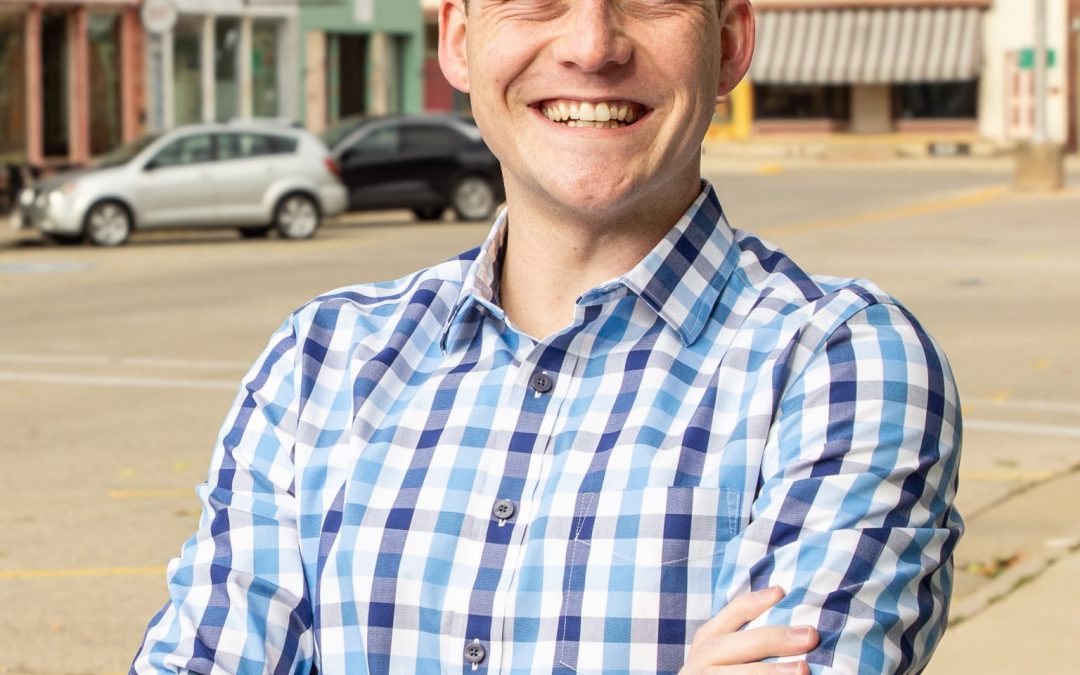
Dr. James R. Lehman is a board-certified psychiatrist. He received his undergraduate degree from UW-Madison with emphasis in neurobiology. He then completed medical school and earned his Master of Public Health at the University of Wisconsin School of Medicine and Public Health. As a student, he was part of the program Training in Urban Medicine and Public Health in Milwaukee, demonstrating his commitment to the underserved, population health, and health equity. He is an advocate for better LGBTQ health care on local and national levels. His areas of expertise are severe and persistent mental illness and LGBTQ mental health including gender-affirming care.
















0 Comments