


|
Getting your Trinity Audio player ready...
|
Mike Adank grew up in Fountain City, WI, a tiny town on the Mississippi just north of La Crosse. And like many kids growing up queer in small towns in the 90s, he assumed he would eventually leave.
“It’s very small,” Mike said, “and I absolutely wanted to get out. There was just no representation here. I didn’t even know what the word ‘gay’ meant until ‘Will & Grace’ was on TV when I was in high school. I didn’t see a future here.”
His admission was surprising given the fact that we were sitting down together over a cup of coffee in The Corner Store, an astonishingly quaint and historic soda fountain that Mike had just opened after moving back to Fountain City in 2025.
In many ways, the story of Mike leaving home and eventually finding his way back echoes the story of The Corner Store itself. It’s a story of community, transformation, and returning to your roots. It’s a story of finding your way home again.



Leaving Home
“Starting over has always been a theme in my life,” Mike told me.
After high school, he went to UW-Oshkosh for a few semesters.
“I wanted to study theater because that was the only community that I had growing up,” Mike said. “But my parents and I felt like there were no careers in theater, so I studied communications and Radio, TV, and Film instead.”
That compromise came at the cost of passion, and Mike soon found himself lacking focus and struggling to pay the bills.
“I dropped out and moved to Kansas City because I had a friend there,” he said. “I knew I would fit in better there, so I just went.”
The restart came with its own kind of excitement.
“Kansas City felt like a big city to me,” Mike said. “I had a fake ID. I got into the gay bars, did some partying, and got a sense of what that life was like, and it was great. But the credit card debt started to pile up, and eventually I felt like I was in a rut.”
Mike decided to move back in with his parents and give school another try. But with time, he started to notice a pattern emerging for him. What started with weed and partying in Missouri became something darker once he was back in Wisconsin’s drinking culture.
“I started going to school at Western Technical College, and I had a 4.0 my first year,” he said. “But then I ended up dropping out because I was not even showing up for exams from being hung over.”
Then, on November 15, 2009, Mike checked himself into an outpatient rehabilitation program. It’s a date he remembers easily because it eventually became a turning point in everything that followed.
Broadway Dreams
Sobriety brought unexpected opportunities. Within months of completing rehab, Mike received a promotion at the television station where he worked. That led to a transfer to Madison, and then an eventual move to New York City with his then-partner, an aspiring actor.
“Normally, you have to work your way up from a Madison market to a New York City market, but I ended up finding a job at Lincoln Center Theater. That was a blessing. It brought me back to when I wanted to study theater. Finding myself in the Broadway community was like an ‘Aha’ moment.”
As a nonprofit, Lincoln Center was a great way for Mike to learn how Broadway operates. The job was glamorous, chaotic, and exhilarating.
“Broadway is a world, and I was very much consumed by it,” he said. “That was my social life. That was my professional life. That was everything. It was always dinner and a show.”
And for a while, it felt like the destination he had always imagined.
A Different Dream
Then, in 2019, Mike started thinking about something else.
“I was single and decided I wanted to become a parent,” he said. “So, I got involved with an organization called You Gotta Believe. They specialize in connecting at-risk youth with permanent families. They work with kids in the foster care system who have a harder time being placed, and they place them with unconventional or less traditional families. So that includes single parents, same-sex families, etc.”
Mike started taking classes to become a foster parent, and then took a leap of faith by upgrading to a two-bedroom apartment in preparation.
“I just kind of put all my chips on the table,” he said.
Then the pandemic hit. Broadway shut down overnight. The industry collapsed into uncertainty, and a year later, Mike lost his job. Nevertheless, he was matched with a 15-year-old refugee named Wilson from Honduras in October of 2020.
“That was exciting,” Mike recalled. “The process gave me something to focus on and be positive about. I was creating a home.”
In November, he found out the placement was official. Then in February, Wilson ran away.
“It was like losing a kid,” Mike said. “It’s normal for teenagers with unfamiliar backgrounds or trauma to panic, and that’s what he did. He left me before I could abandon him.”
“My world collapsed after that,” he continued. “I was on a high from becoming a parent, and then it was taken away. I didn’t know if I would ever see him again. It was a very low point. I was on the couch crying for a week.”
It took a long time to get over that, but the story doesn’t end there.
Meanwhile
Back in Fountain City, the building that would become Mike’s version of The Corner Store was being used as an antique shop, but that wasn’t what the space was built for.
“It was originally a soda fountain,” said Mike. “In fact, the back bar, the stools, and the tin ceiling were installed in 1926, so they’re turning 100 this year. This space has been different things over the years, but no one has ever touched that bar. It’s original.”
In fact, as Mike explained, the space was run as a pharmacy and drug store back in the 20s. But in those days, a lot of drugstores installed soda fountains because they used the carbonated waters for tonics and medicines.
Mike showed me the space, built-in seating with rattan caning, the alcove behind the bar where the soda fountain goes, and a few other original features, all testaments to a time when the building operated as a community space, not merely a business.
“The previous owners, Mel & Rosie Conrad, upgraded the soda fountain equipment in 1965 and started running it as an ice cream parlor and general store called The Corner Store. Right now, I’m working with a company in Chicago who specializes in those machines. When they finish refurbishing it, we’ll start serving ice cream again.”
Then Mike told me about his childhood memories of the place. “When I was growing up, half of the building was a laundromat. Where we now have seating and bookshelves are where the dryers used to be.
“The other half was an ice cream and coffee place,” Mike said. “The woman who ran it did antiques out of here for a while, but mostly she served regular coffee, ice cream, shakes, and malts. I remember coming in here for the best chocolate malt you’ve ever had and a friendly face behind the counter. Her name was Fran.”
Fran’s picture still hangs in the space.
“It was very important to her that it be a community gathering place because that doesn’t really exist in Fountain City, especially for the kids. We have three bars and three churches, but that’s it,” Mike said.
A number of years ago, Fran had a stroke. The Lettner family started renting the space out. Then about 15 years ago, a gay couple bought it and restored it. They ran an appointment-only antique shop for a while before deciding to move out of town.
“They still own the building, but they told me that more people asked about a soda fountain than the antiques,” Mike said. “That’s just what this building is meant to be.”
And soon, it would be.
Mike’s Turning Point
In time, the pandemic waned, and Broadway reopened. Mike found a job at the Broadway League, an organization that oversees and organizes many of the parts that allow Broadway to operate as an industry.
“They co-produce the Tony Awards,” Mike said. “There has been basically one woman managing the overall Tonys administration for the last 20 years. It’s a tightly guarded niche, and I was getting ready to eventually take on that role.”
“I was literally the person who got to pin every Tony Award nominee,” he said. “It was a really cool time.”
But beneath all the glitz and glam, Mike still felt like something was missing. About a year later, Wilson reached out again. Slowly, the two rebuilt contact through texts, phone calls, occasional updates.
“We ended up maintaining a regular relationship, but he was in with the wrong crowd and got into some trouble. He has been in jail for almost two years waiting for a trial, but they keep postponing it.”
As Mike explained, the situation makes him feel very helpless. Wilson came here for a better life and opportunity, but we have done nothing but fail him. The immigration system failed him. The foster care system failed him. And now the justice system is failing him.
A little while later, another message arrived, this time from Wilson’s younger brother, Maynor.
“Maynor had been released from immigration to a family friend in Texas,” Mike told me. “He was 15, but his sponsor had pulled him out of school and had him working full time, which is illegal.”
Through translation apps and late-night conversations, Mike realized the situation wasn’t safe and contacted refugee services. Because of his connection to Maynor’s brother, authorities believed Mike was the safest emergency placement for him.
“We slept in the airport that night,” he said. “Then we flew back to New York, went shopping for clothes and groceries, and on Monday Maynor started school. It was a fun, unexpected way to become a dad.”
Rethinking Home
“After that, we knew it was time for a change. New York was just getting to be a little too much. After three years of doing the Tony Awards, I felt like I was a hamster in a wheel. I was asking myself, ‘Is this really it? Have I reached the top? Is this what I do for the next 20 to 30 years to be happy?’”
It would have been a stable choice, but watching his son long for connection with siblings and extended relatives made Mike reconsider his own distance from family.
“My parents are getting older,” he said. “And I realized I had family right across the country that I barely saw. I wanted that big family, especially for my son.”
The idea of leaving the city grew slowly. At first, he imagined moving to a quieter suburb. But eventually another possibility began forming: Returning home.
The Building on the Corner
The moment arrived almost accidentally. Mike was visiting Fountain City for the Fourth of July when he walked past the old building.
“I was across the street at the Historical Society just digging through old stuff,” he says. “And there was a ‘For Rent’ sign. I hadn’t looked inside in decades. Then the idea of the soda fountain just clicked.”
As it turned out, the new owners had been waiting for the right tenant before they rented it out again. That tenant was Mike.
On November 14, 2025, Mike legally adopted Maynor, who had just turned 18. The two had opted for an adult adoption so it would be fully Maynor’s choice. He even asked to take Mike’s last name. It was one of the best moments of Mike’s life.
The next day, November 15, 16 years to the day after getting sober, Mike re-opened The Corner Store. The timing felt intentional.
Inside, the space blends past and present. Some items like the milkshake glasses and soda equipment are original to the store’s earlier era. Others Mike collected himself. He has filled the shelves with books but doesn’t sell them.
“A lot of people ask how much they are,” he said. “But I want people to just sit and read.”
That philosophy reflects the “third space” that Fran had been trying to safeguard all those years—an idea that Mike also feels committed to.
“We’ve lost that here,” he says. “It’s important to have a place where you can just go and connect. That’s why we have board games and areas for conversation.”
When The Corner Store first re-opened, the reaction from the community surprised him.
“It was like seeing an 80-year-old man walk into a candy shop,” Mike said. “You could see the memories flood back into their eyes. They’d just stand there speechless. Then they bring their kids in, or their grandkids,” he said. “They pass the tradition on.”
Watching those generations overlap inside the store has become one of his favorite parts of running The Corner Store.
Starting from Strength
Returning to Fountain City might look like a restart from the outside. But Mike doesn’t see it that way.
“When I left New York, people thought I was starting over,” he recalled. “But I didn’t feel that pressure this time. I kept telling myself: I’m not starting from scratch. I’m starting from strength.”
That mindset has shaped how he’s approached life back home. He joined the local historical society board. He’s choreographing the high school musical. He’s planning to revive the town’s summer theater tradition. He’s even running for city council.
“I just kind of threw myself into everything,” he says. “So, the pace of life doesn’t feel any slower.”
Fountain City is still a conservative place. Mike knows that. But he’s not interested in confrontation. Instead, he believes something simpler can be powerful. “Just being here,” he says, “it’s the representation I was missing as a kid.”
Coming back to Fountain City has been, in his words, “cathartic.”
Home, he has learned, isn’t always something waiting for you somewhere else. Sometimes it’s something you build with the people who are most important to you.
Where You Belong
From cabins to boutique hotels, these rural Wisconsin getaways create space for LGBTQ+ travelers to rest, connect, and feel at home.
From the ridges of the Driftless to the streets of Princeton, LGBTQ+-owned accommodations are redefining what it means to get away. These spaces offer more than a place to stay; they reflect the personalities and values of their owners, creating environments that feel affirming. In regions where visibility hasn’t always been guaranteed, they invite you to experience rural Wisconsin on your terms—where belonging is part of the landscape.
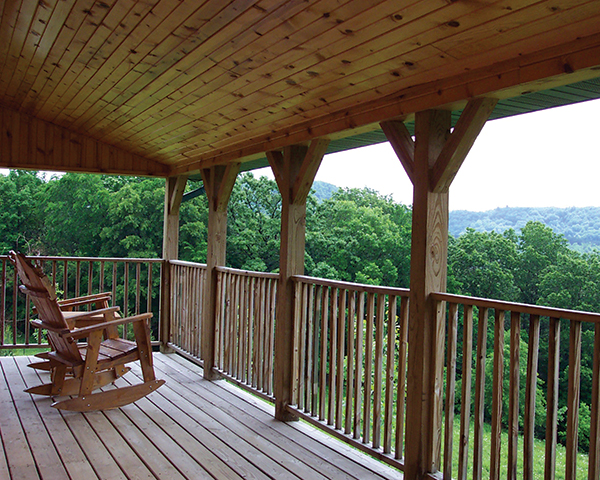
Set in the Driftless Area of southwestern Wisconsin, Kickapoo Valley Guest Cabins offers a slower kind of getaway shaped by steep ridges and winding rivers.
Created by partners Cowboy Joe and Cowboy David, the property features eight standalone cabins blending rustic charm with comfort—king beds, fireplaces, and porches opening to uninterrupted nature. It feels less like a resort and more like staying on someone’s land.
Hospitality is personal. Guests might be greeted with fresh baked goods, while horses and llamas roam the property. Days unfold simply: coffee on the porch, walks through nearby trails, or paddling the Kickapoo River.
Though not overtly branded around inclusivity, its LGBTQ+ ownership is reflected in a relaxed, welcoming atmosphere often noted by guests. In a rural setting, that sense of ease stands out.
For travelers willing to venture off the usual path, the cabins offer a quieter, more grounded way to experience Wisconsin.
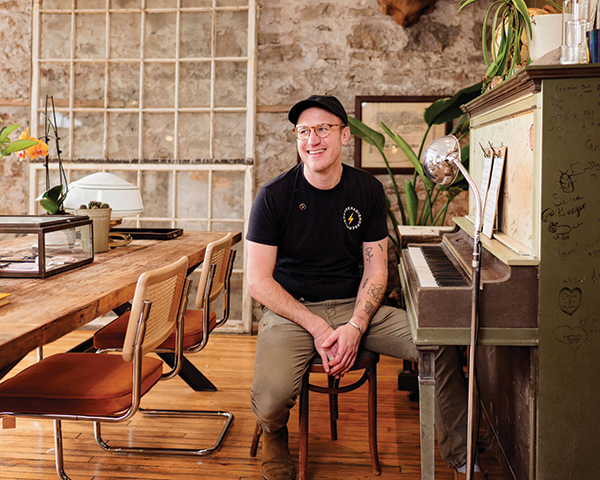
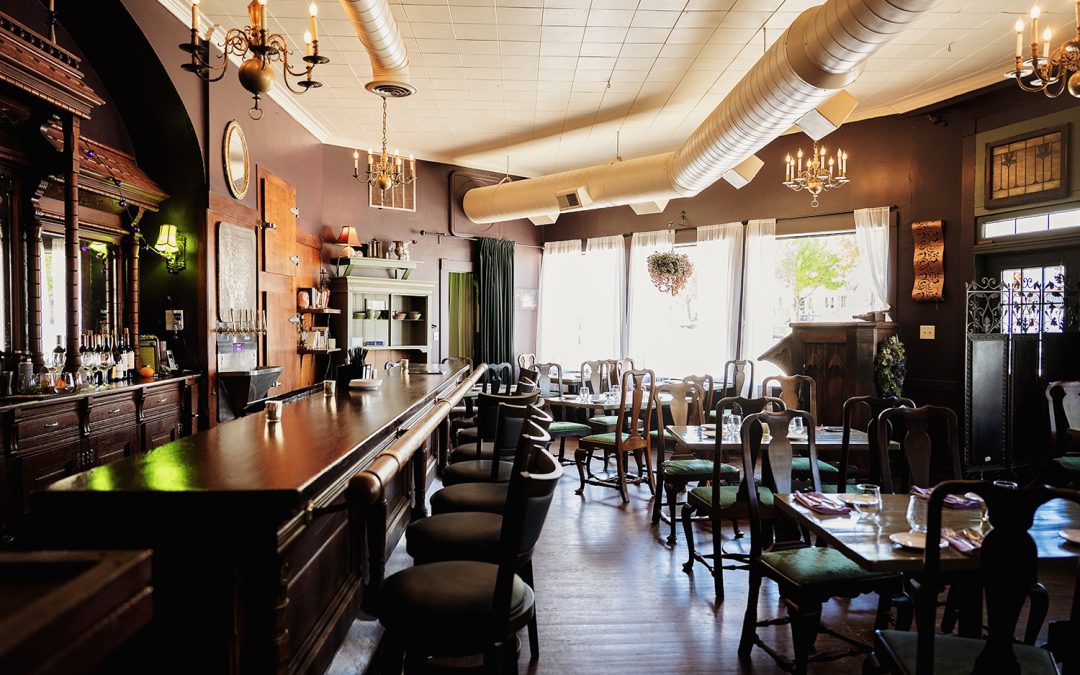
Parlor Hotel reimagines small-town Wisconsin through a design-forward lens. Located in downtown Princeton, the boutique hotel transforms an 1868 building into a space that feels part art installation, part living room.
Owner and designer Matt Trotter returned to his hometown to help fuel its creative revival, building an ecosystem that blends lodging, food, retail, and performance space.
The hotel features seven unique rooms, but its heart lies in shared spaces. The lobby acts as a salon where guests can play music, sit at the piano, or connect.
Parlor openly welcomes guests of all identities, challenging assumptions about rural spaces and offering a version of small-town Wisconsin that is creative and inclusive.
Staying here also means engaging with Princeton itself—walkable and quietly vibrant along the Fox River. Guests can explore shops, galleries, and nearby Green Lake before returning to a space that feels personal.
Parlor Hotel reflects a broader vision of what rural Wisconsin can be: stylish, welcoming, and rooted in place.











0 Comments