

|
Getting your Trinity Audio player ready...
|
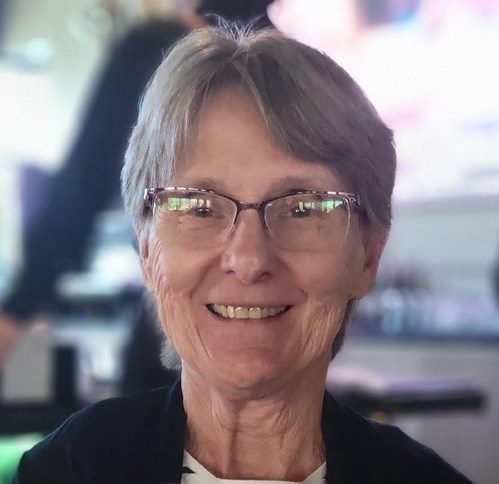
I’m Abigail Swetz, the new executive director at Fair Wisconsin, and I’m a poet.
Maybe this is an odd way to introduce myself as the new leader of Wisconsin’s only statewide LGBTQ+ civil rights and political advocacy organization, but I would contend it is the most authentic way. The very first question at my initial interview for this role was to tell the board something about myself that was meaningful and relevant to the position but would not be found on my resume. I told them I’m a poet, and that being a poet means I am able to see connections between things (like challenges and opportunities) that other people might struggle to notice. I’m not much of a rhymer, but I do have a lot of insight into the connectivity of the work we do.
And I have a lot of connections directly with Fair Wisconsin, and with the work we have done over the years far before I arrived here as executive director. In fact, the signs in yard after yard after yard stating “A Fair Wisconsin Votes No” in the spring of 2006 are the reason I moved to Madison. I was living in Tulsa, Oklahoma at the time, and such a visible show of support was unimaginable at my apartment complex across the street from Oral Roberts University. So I packed my bags and rented a sublet near campus, determined to build a life in a state that was fair and just for LGBTQ+ residents. I, and Fair Wisconsin, are still determined.
A few months later, I stood along the parade route at my very first Pride. I saw elected officials, community organizations, and so many churches marching while waving rainbow flags and pumping dance music from car speakers. It was my first experience of queer communal joy. I knew I belonged here. I had found my home in Wisconsin. After all, I was born and raised in Spring Green; Wisconsin made me. Today, as I type from my home in Green Bay, I am proud to live here in Wisconsin. Proud to work here. To love here. To vote here. And now, to lead here at Fair Wisconsin, doing the work to ensure that everyone can find this state to be as welcoming as I did.
Soon, I was a middle school teacher in a small-town school district. It was my first year teaching when a parent filed a complaint against me. Ostensibly, the complaint was about the rigor in my curriculum, but considering the timing of the complaint (the day after the GSA had announced our participation in the Day of Silence the following week), I think we all knew what was actually going on. Despite knowing I had the support of school and district administration, and knowing that the nondiscrimination law in Wisconsin protected me from employment discrimination on the basis of my sexual orientation, it was demoralizing. I vowed that it would not silence me, and I kept working with the GSA, cutting ribbons and planning for distribution stations at each entrance door. One week later, on the Day of Silence, my GSA passed out more ribbons than the number of students who went to our school. The hallways were a sea of rainbow, and the cafeteria was eerily quiet as so many students had taken a vow of silence for the day. The experience drove home the urgency of including protections for our entire LGBTQ+ community in Wisconsin’s nondiscrimination law by adding protections for our trans and non-binary family, something Fair Wisconsin is dedicated to making a reality—and I believe should be our legislative priority.
And then there was the Supreme Court marriage equality decision, made possible by one vote by one justice… and by years and years of activism by countless activists laying the groundwork for change, activists like the ones who made up Fair Wisconsin. I was moved to joyful tears on June 26, 2015, but not for the reason one might expect. It wasn’t because I could get married now; it was because I could get divorced. I had separated a year before, but Wisconsin did not recognize my marriage license from another state as valid, so I could not file for divorce. Now that I could, I could truly move on with my life, and two years later, marry the love of my life under the gazebo of Olin Park. We just celebrated our seven-year wedding anniversary and are raising our infant daughter together. I, and Fair Wisconsin, know this right to marriage equality remains too tenuous for comfort, and we must (and will) work to protect it.
Even my teaching is wrapped up in Fair Wisconsin. As a Gender and Sexuality Alliance advisor and 8th grade teacher, I witnessed the brilliance, and the passion for justice, our young people show on a daily basis. I saw them take to the streets because that was the avenue to power afforded to them, and I was inspired to go to grad school and study public policy so I could get into the rooms where decisions are made and bring their perspective along with me. In my last year of teaching, GSAFE named me Educator of the Year. As I finished my acceptance speech, I shared a message directly with my current and former students at the event, telling them that building safe spaces in our classroom had been a communal effort, and that I would take them and their stories with me wherever I go. I am proud that they helped get me here, and I think they’d be proud I’ve ended up here at Fair Wisconsin. In fact, I know they are, or at least one of them is. Sean O’Brien, Policy and Advocacy Director at Fair Wisconsin, is a former student of mine. Now I’m his boss, but I like to think we’re still doing communal work.
In the final moments of my second interview with the board of Fair Wisconsin, I read them a poem that I had written. It was in the form of hypothetical testimony before an all-too-possibly-real elected body about to vote on anti-LGBTQ+ policies. It ended like this:
When we say pronouns save lives
Or one trusted adult makes a difference
We are not talking in theoretical terms.
There are children who are still here
Because a teacher used “they/them” to
describe a student’s smile as their own
Or wore a rainbow ribbon on a lanyard
Or insisted on creating a safe space despite your vitriol.
Rainbows and pronouns and safe spaces
do not create queerness.
They allow it to breathe.
Maybe it was an odd way to end an interview, but at least I knew that, even if I didn’t get the job, I had brought my full, authentic self to the interview process.
And that is what I want for all LGBTQ+ people in Wisconsin. That ability to bring our full, authentic selves to all aspects of our lives. That is the Wisconsin I believe in, a truly fair one, and that is the Wisconsin the Fair Wisconsin will work to fully realize.
For more information on the work of Fair Wisconsin, please visit fairwisconsin.com.










0 Comments