






|
Getting your Trinity Audio player ready...
|
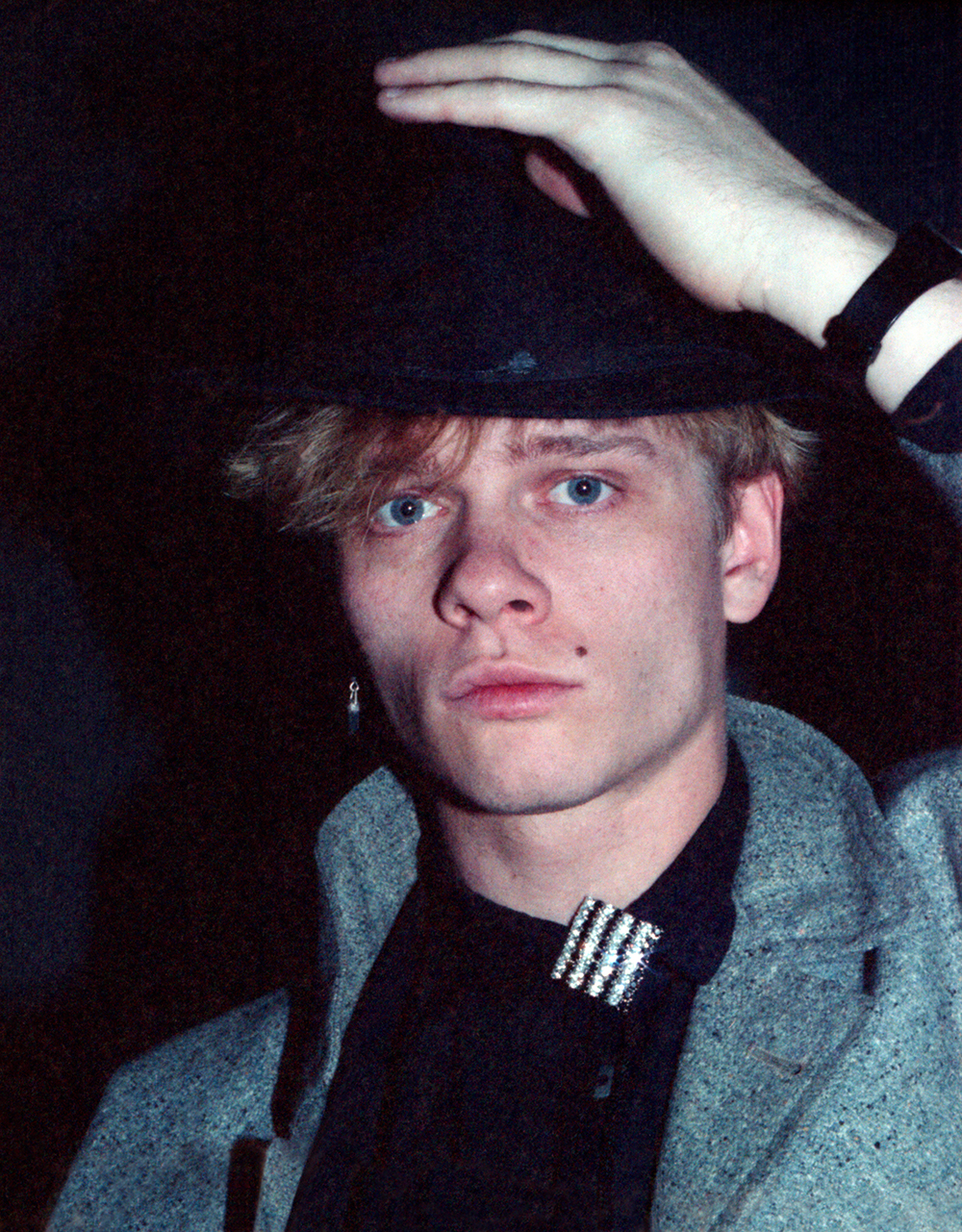
On October 29, 1990, the remains of 25-year-old William Arnold Newton (aka Billy London) were discovered in a Los Angeles dumpster south of Santa Monica Boulevard. The crime was shockingly sinister: Newton had been chopped into pieces. Only his head and feet were ever found.
“It was the reverse of what you’d do when you’re trying to cover up a murder,” said author Christopher Rice. “The killer left the most identifiable body parts where they’d be found. The killer was trying to send a message.”
Today, such a brutally violent crime would trigger widespread panic. But Los Angeles was a different city in 1990: Ravaged with record-breaking homicide rates, battered by the AIDS crisis, and trapped in a spiritual spiral with seemingly no bottom.
Although the Tom Bane Civil Rights Act has provided protection against hate crimes since 1987, certain victims continued to be overlooked due to sexual identity, occupation, and criminal history. As a gay man, bathhouse employee, sex worker, and adult film star, Billy—like many victims of the 70s, 80s, and 90s—was not seen as an innocent victim by society.
The Newton murder quickly became known as the “Gay Black Dahlia,” and like the original Black Dahlia, it was riddled with speculation. Rumors circulated that Billy was killed in a drug deal gone bad, or by an especially violent trick, or in a “gay panic” incident, or by someone he’d infected with AIDS.


None of these were even close to the truth.
Despite the best efforts of his father, private investigators, and a devoted police detective working against time and across decades to crack the case, Billy’s murder was still unsolved 30 years after his death. By 2020, very few people even remembered the crime, much less the name Billy Newton.
Thanks to the remarkable efforts of filmmakers Rachel Mason and Dion Labriola, social worker Clark Williams, writers Eric Shaw Quinn and Christopher Rice, and Los Angeles Police Detective John Lamberti, the case was finally solved in February 2023 after a five-year investigation. Their journey spanned from California to Wisconsin to Oklahoma, as the team explored the sordid sides of the adult film industry, the white supremacist movement, and the Jeffrey Dahmer murders.
Here’s the incredible story.
Meet Rachel Mason
Rachel Mason wears a unique crown in West Hollywood.
“I’m gay porn royalty,” she said half-jokingly. “I have an emotional connection to gay men of a certain generation. I guess you could say it’s because of my background.”
Rachel grew up in Los Angeles, where her parents owned Circus of Books (1982–2019.) Barry and Karen Mason, former distributors for Flynt Publications, served an ever-growing demand for gay adult content at the peak of the video boom. In the time before Grindr, their shop became a destination, if not community center, for a generation of gay men. While locations later opened in Silver Lake and Sherman Oaks, the West Hollywood location was especially popular for its neighboring cruising spot, “Vaseline Alley.”
Growing up, Rachel had limited involvement in the bookstore operation, but as an adult, she became fully embedded within the LGBTQ+ community. While taking a Gay and Lesbian Studies course at Yale, Rachel was inspired to document her family’s unique experience.
“My professor Jonathan D. Katz said, ‘You’ve got to do something about this, Rachel. This store contains our history.’
“When my parents decided they needed to close the stores, that’s when I really felt the urgency to document the legacy of Circus of Books. And it was truly for the historical record within the LGBTQ+ community. Netflix couldn’t have been further from my goal, because I never thought that mainstream audiences would care.”
While filming the Circus of Books documentary (2019) Rachel confirmed what she’d long suspected: Gay pornography wasn’t just cheap entertainment, but a significant source of cultural history.
“I remember my professor saying, gay pornography is gay history,” said Rachel. “In the decades when it was illegal to be gay, the entire culture was forced to be underground. The men who made porn were like outlaws. LGBTQ+ people saw no representation of themselves anywhere in the world at that time, so these publications were a tremendously valuable source of visibility for the community.
“Gay pornography didn’t just celebrate the reality of men being free to be with each other, however, it documented how people dressed, spoke, cruised, and partied, where people went and why, and their use of language: Code, slang, innuendo, humor. It offered a spark of hope for a liberated world where long-term relationships, and even love, might be possible,” Rachel said. “If you care about gay history the way I do, you have to accept that gay pornography has historical value—and I believe more so today than ever.”
After the Masons closed their retail operation, businessman Rob Novinger created a luxury gay adult boutique store in the original building in West Hollywood, keeping the store’s original name. “When their store was closing, elderly men came through, some even barely able to walk, they were crying real tears saying their goodbyes like it was a funeral, paying their last respects to a porn store. I was so moved by that,” said Rachel.
That moment sparked Rachel to make a startling observation. Circus of Books wasn’t just a retail store. It was a place of safety for a generation, a place where they could be completely themselves no matter how harsh the world outside.
“What I’ve learned over the past few years through my conversations with a person in prison who perpetrated such violence, is that there’s a specific history of unthinkable oppression, cruelty, and targeted violence against gay men,” said Rachel. “This violence is so much worse than anyone has ever reported, documented, or known. The AIDS crisis was just one part of the suffering for a generation of gay people.
“I saw the AIDS crisis with my own two eyes. These guys were so amazing: Gorgeous, funny, well-dressed, the ultimate gay men of the 1980s. I was in love with all of them. That’s how I became the fag hag I am to this day,” Rachel said.
“And I remember asking my parents whatever happened to this one, or that one, and my parents just point blank telling me they’d died,” she said. “Where’s Jimmy? Dead. Where’s Johnny? Dead. Where’s Rob, Tom, Jack? Dead, dead, dead, dead. As a kid, I was bewildered. I never really processed what happened to these men. I didn’t process it until I made the documentary.
“We witnessed the AIDS crisis in real time,” said Rachel. “My mother and father became substitute parents to so many guys who had no parents. Where did they come from? Who were they? Where did they all go? There is an actual scene in the Circus of Books documentary—and it’s such a coincidence now, or perhaps foreshadowing of the next film I would have to make—where my dad said, ‘Some of them would go back where they came from, you know, places like Wisconsin.’”
Rachel knew exactly what those Wisconsin boys looked like: Blonde hair, blue eyes, broad shoulders, looking like the California dreamboat, but actually from the cornfields, dark winters, and tiny towns of the Midwest, where they couldn’t safely be themselves.
“There was almost a gay diaspora in West Hollywood,” said Rachel. “While making Circus of Books I became obsessed with thinking of how to preserve the memory of this generation lost to AIDS, and that started with understanding who these men were.”
Rachel met with Mike Szymanski, adult industry journalist and historian (who is known in the industry as Mickey Skee) to view archival photos of men lost to the crisis. She didn’t want to see glossy headshots or press kits. She wanted to see pictures with personality, unfiltered and untouched, with authentic boy-next-door realness, so that she could pay tribute to them with a montage in her documentary. Mike offered her his full collection.
As he was flipping through his scrapbook, an article clipping flew out, and the headline immediately caught Rachel’s attention: COPS HAVE NO CLUES IN GRISLY KILLING OF LA PORN ACTOR, co-written by Chris Bull and Szymanski. A January 1, 1991, article in The Advocate explored the gruesome murder of Billy Newton.
The article featured casual photos of Newton, as well as interviews with his friends, roommates, and Los Angeles police detective Ron Venneman.
Rachel was speechless. “I was just like, wait a minute: What is THIS? I was beyond shocked. It felt like such a horror, for people already living through so much everyday horror. A person was beheaded. His body was desecrated. And the community was just supposed to move on?”
After hearing about Billy’s ordeal, Rachel couldn’t let it go. She wondered how the case could possibly still be open.
That’s when Mike Szymanski said, “You know, the victim’s lover worked at your parents’ store. He’s always been the prime suspect. You should ask your parents about him.”
Rachel was astonished. She suddenly realized she had a whole new calling. This young man who was lost to violence, not AIDS, had a connection to her family.
And he was from Wisconsin, of all places.
“Of all the states to mention in the documentary, my father mentioned Wisconsin,” said Rachel. “Everything just came together all at once. That’s why I believe in gay angels. Little did I know, for the next five years, I’d be tracking the life of one of those guys from Wisconsin.”
Who was Billy London?
Billy London was born William Arnold Newton in Eau Claire on July 26, 1965. At age 14, he moved to Ladysmith, before moving again to Oklahoma City a year later.
“Billy’s mother moved him around every single year of his life,” said Clark Williams. “He never stayed in any school for more than one year. We couldn’t find any of his childhood friends because he had none. He had no one who knew him, other than his sister, who met him as an adult. His mother suffered from mental health issues, and Billy was presenting with some of those symptoms, too. He was constantly searching for connection because he never had any to begin with.”
Billy dropped out and ran away when he was only 16. After arriving at his father’s house in Oklahoma, he was disowned for being a “faggot,” his father slamming the door in his face. After a few years in survival mode, Billy earned his beautician license in 1984.
In 1985, he arrived in Los Angeles, where he earned a GED while working various hair, make-up, and choreography gigs. He took a job at the Hollywood Spa (1650 Ivar Ave.), one of the largest and longest-running gay bathhouses in LA with one hundred rooms and 100,000 visitors a year.
There, he met Mark Rabins (aka David Rey), who became his lover. Rabins helped him break into the adult film industry, where he made five films. The couple founded London-Rey Productions, which made eight films between 1987 and 1990.
But Billy didn’t see himself as a porn star. He considered himself an artist and a poet who was only doing porn to pay the bills. When Los Angeles County ordered all bathhouses (including the Hollywood Spa) closed in 1988, he needed the money more than ever.
By August 1990, Billy was couch-surfing with a throuple in West Hollywood. He was planning a move to Las Vegas to live with his mother and sister. He filmed his last scene the day before he died. He and roommate Paul Jetty were planning a Halloween party. He called a friend that day, who said Billy sounded upbeat, optimistic, and happy about his future. He’d recently kicked a drug habit, a symptom of his lifelong compulsive personality, and seemed to be on the path to health.
“He was just four days away from escaping Los Angeles for good,” said Mark Rabins.
On October 28, 1990, Billy told his roommates he was going to rent a movie. He actually went to Rage Nightclub (8911 Santa Monica Boulevard), where he sat alone having drinks all afternoon. He left the bar around 3:00 p.m., then he just vanished forever.
Reporting in Real-time
Chris Bull was working at The Advocate in New York City in the fall of 1990. He remembers getting the call from Mike Szymanski, an on-the-ground reporter in Los Angeles.
“It was a shockingly violent time to be a gay man,” said Bull, “and I’d covered so many hate crimes that I had actually developed a beat reporting them. There were so many unsolved cases because of police indifference, negligence, or bias. Mike connected us with the Los Angeles Police Department. I remember thinking at the time that the police seemed very intimidated by the gay subculture they were wading into. I don’t think they knew what questions to ask. As a result, they never fully understood what they were dealing with.”
The world was very different in 1990.
“Queer lives were somehow more expendable at the time,” continued Bull. “We lived in a culture where queer lives weren’t taken seriously. Someone could disappear and nobody would ask questions. Hate crimes were more prevalent and pervasive. News cycles and narratives were accepted without question. There were absolutely no digital spaces for communities to come together. We were all completely disconnected, so we believed what we were told.”
Unfortunately, this only escalated the risks for marginalized communities.
“As AIDS ravaged America, so did an anti-gay backlash,” said Bull. “Porn stars represented an illusion of sexual positivity at a time when sex was widely associated with death. Escorts, sex workers, and porn stars often come in contact with people uncomfortable with their own sexuality. They experience a lot of abuse and violence. I remember wondering if Billy was targeted by someone’s shame turned into rage.”
After researching the case, Bull knew this wasn’t a random act of violence. This was no small-town murder. This was a killer demanding attention.
“This was a classic case of overkill homicide,” said Bull. “This was done right in the middle of everything, in the most vicious and violent way possible. And that’s what the fear was: There’s something going on here. It would take a terrifying amount of homophobia to get to that level of violence.”
“We were sharing a world with serial killers, some of whom were gay themselves, preying on gay men. That was the climate we were living in. We just didn’t know it yet.”
Reopening the Investigation
Finding people willing to talk about the crime wasn’t easy, especially after 30 years.
“It wasn’t a story the adult film industry wanted to talk about,” said Kevin Clarke, a film director who worked in the industry at that time. “Welcome to West Hollywood, where you can become a porn star and get your head chopped off and thrown into a dumpster.”
“The first thing I did was talk to Mark Rabins, so I could hear the story directly from him,” said Rachel. “And then I just instinctively started diving in. I created a gigantic mess of a spreadsheet looking up every name that seemed relevant. I called people, spoke for hours, and took extensive notes. Looking up people like all the different bartenders who ever worked at Rage, any friend of Billy’s anywhere in the world, the producers and stars of the productions that worked with Billy, and of course Billy’s family, in particular his half-sisters who were all extremely supportive of the effort.”
Rachel learned that Billy’s father, Richard Harriman, had hired a private eye to work on the case. After 19 years, the investigator surrendered his findings to the LAPD, noting the risk of a “highly sophisticated killer.” For years, Harriman ran a website and email tipline seeking leads in the case. He died in 2011 without ever getting any answers.
“I wrongly assumed the police saw Billy Newton’s case and said, ‘What’s another dead gay man? What’s another gay sex worker?’” said Rachel. “I couldn’t have been more wrong.”
“The police hadn’t neglected this case at all. In fact, Officer Wendi Berndt had worked extremely hard on the case for 25 years and never let it go. She even reopened it in 2005 hoping that modern technologies might move it forward. When I finally tracked her down after over a year of searching, she said, ‘Every detective has a case, and Billy was mine.’ She retired from the force thinking this would never be solved. It meant a lot to her that we were interested in solving it.”
Rachel reached out to filmmaker and editor Dion Labriola to help with footage that she had started collecting from interviews she was conducting on her own.
“Rachel and I worked together on Circus of Books, and had become really good friends,” said Dion. “When she told me the story we’d be working on together, it gave me chills because I knew this story. I’m 99% sure I read about the case in Windy City Times when I was living in Chicago.
“Rachel said she wanted to revisit this story, and the players involved, in hopes that someone would see the documentary and come forward with information that might solve the crime,” said Dion. “And I remember thinking: Good luck. We were digging into the gay porn scene of the late 80s/early 90s. There’s not going to be anyone left alive who is going to be able to help us.”
Dion and Rachel produced a sizzle reel to start building support for their documentary. The hope was that the documentary would serve as a vehicle to help elevate the story, and potentially even solve the murder.
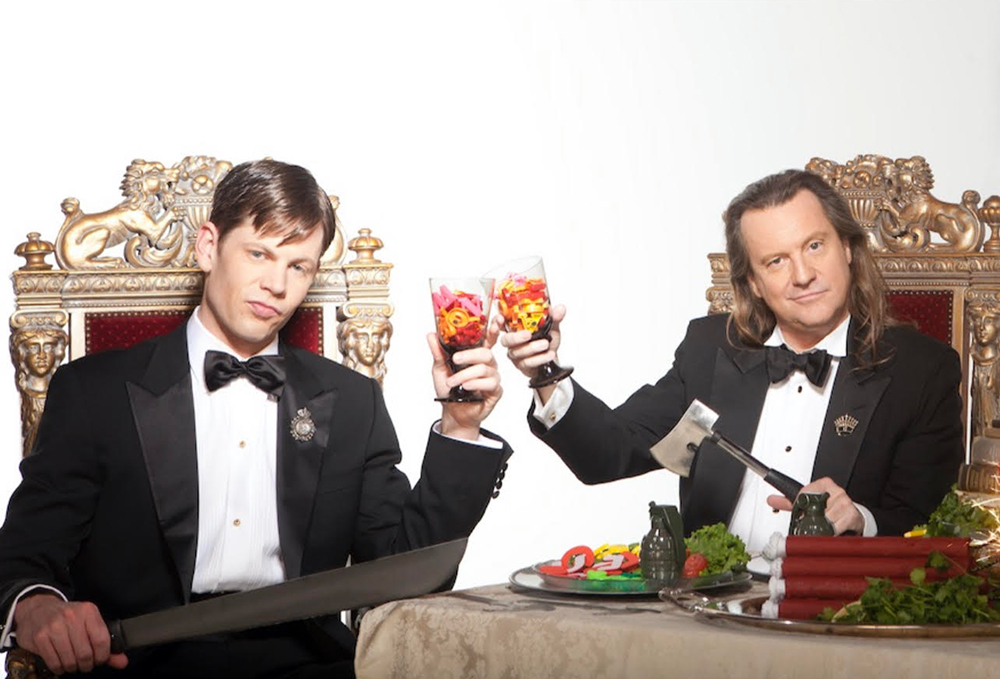
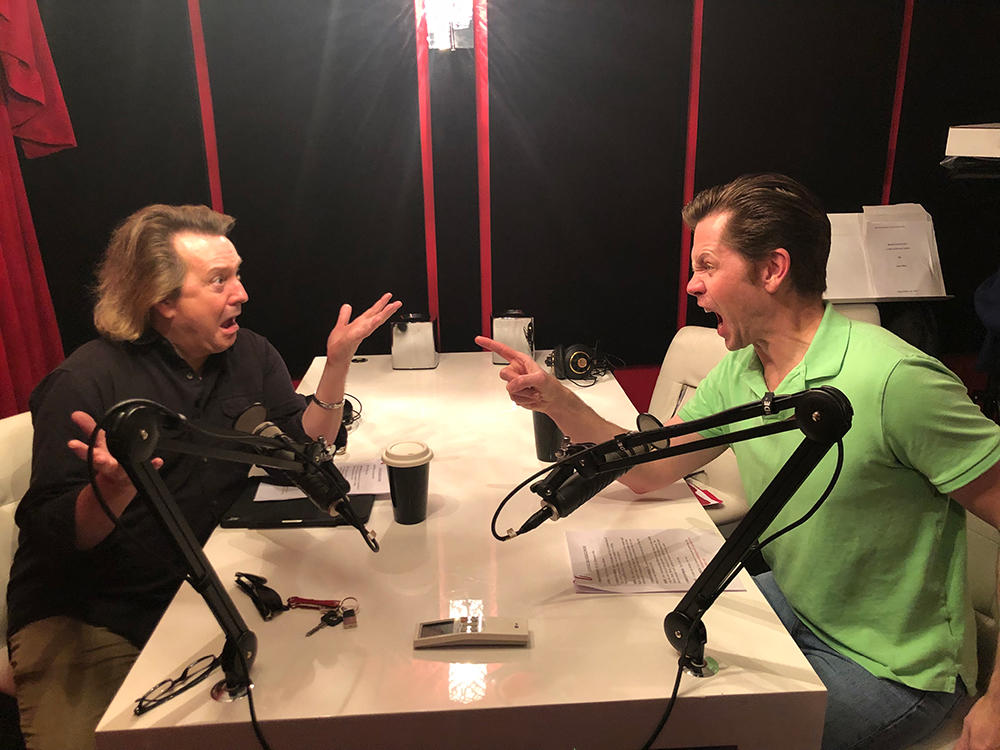
And then, a miracle happened. On August 9, 2020, Christopher Rice and Eric Shaw Quinn devoted an episode of their podcast to unsolved murder mysteries, including Christopher’s obsession, Billy London.
“It was just the wildest coincidence,” said Rachel. “Mickey Skee asked if I heard the podcast, and I was like, someone did a podcast? Who? Why? And why now? Almost 30 years to the day he died, all this interest started swirling around Billy’s case. Something very cosmic was happening.”
Pandora’s Box Opens
Eric Shaw Quinn moved to Los Angeles in 1991. Upon arrival, he asked his apartment manager which bars on Santa Monica Boulevard were the gay bars.
“All of them, my dear, all of them!” was the response.
Eric remembers the story of Billy’s murder still circulating in those bars, even a year after it happened.
“It was like a ghost story,” said Eric. Be careful who you get into a car with, little boy, or your head might be found in a dumpster, too. “I couldn’t believe this was a real thing. It was too hideous to be real. It was like something out of a horror movie. I was walking the same streets Billy walked, going to the same bars Billy visited, being warned I could be next.”
Christopher Rice, who arrived a decade later, read about the case in a “Top 10 unsolved Los Angeles murders” article. After a mutual friend produced a TV series episode inspired by Billy’s murder, and the HBO documentary I’ll Be Gone in The Dark explored the Golden State Killer case, they decided to dedicate a podcast episode to the unsolved mysteries they were obsessed with.
“Billy wasn’t someone who was going to get a Dateline or 48 Hours investigation,” said Eric, “purely because of who he was.”
“We immediately hit the first obstacle: There wasn’t much of an internet footprint,” said Christopher. “But the thing that did it for me—the thing that really made me want to platform the case—was discovering that Billy’s father (and really the only person still advocating for him) passed away. No one was fighting for Billy anymore.
“We couldn’t let Billy remain in that dumpster forever. That couldn’t be the end of his story,” Christopher said. “Never in a million years did we think his story would have this extra chapter.
“The Los Angeles Times didn’t cover the murder in 1990 because police didn’t want to disclose that Billy was an adult film performer. That was a label even worse than being gay. Even the Wisconsin papers omitted that detail,” he said.
“We accepted that the police might not have done much in 1990, but what more could they do?” said Eric. “This was an era when gay men were attending funerals every week. At the same time, there was a tremendous mistrust of the police. The police had no inroads into the community, and the community was too exhausted and afraid to mobilize around the crime.
“Death was very much a part of our day-to-day lives,” Eric said. “Nobody believed we would survive the AIDS crisis. ‘Why be careful? Why take precautions? You’re going to die anyway.’ We’ve forgotten how fatalistic this moment in time really was.”
The Billy Newton story inspired a nine-part deep-dive for the Christopher & Eric podcast, including a guest appearance from Rachel. Through their research, the podcasters came to a chilling conclusion: This was no random murder.
“There was this long-time notion that Billy was murdered by a trick gone bad,” said Christopher. “That he was this young, beautiful boy who just got in the wrong car with the wrong guy. But in “gay panic” cases, the violence is unplanned, chaotic, and messy. There’s no rhyme or reason. There’s no time to be clean. Billy’s killer demonstrated the hallmarks of an efficient and precise serial killer: Decapitation, mutilation, segmentation. This was a preplanned, systematic, precise killer who took time and care. This was someone who had everything ready. Billy went home with someone who was absolutely prepared to murder him.”
Christopher and Eric set up a tipline seeking leads to advance the investigation. They knew their listening audience included older Angelenos who would remember the case, and possibly even had known Billy.
“The notion that ‘everyone from that era is dead’ was really kind of silly,” said Eric, “because I’m from that era, and I’m still here. I knew someone out there would know something.”
“This very quickly became a ‘be careful what you wish for’ situation,’” said Rachel.
On October 25, 2020, Christopher and Eric unleashed a bombshell: Ron Wheeler, who’d lived in West Hollywood in 1990, contacted their tipline with the tip of the century. He’d seen Billy Newton at Rage that night. In fact, they were flirting with the same customer. Eventually, Billy left with the customer and was never seen again. A year later, Wheeler was watching news reports about a mass murder in Wisconsin when he recognized the man Billy left with.
It was Jeffrey Dahmer.
Although Wheeler never shared this story with Los Angeles police, he said he’d contacted the Milwaukee Police in 1991 without any response. In October 1991, he met with people in West Hollywood including the Rage bartender working that fateful night. He agreed that Dahmer (or a “damn good lookalike”) was the person Billy left with. He also learned that Dahmer’s mother was living in Fresno, California at the time. Years later, Wheeler spoke to someone in Palm Springs who claimed that Milwaukee police claimed that Dahmer had denied killing Billy. Some believe he only denied the crime to avoid the California death penalty, which Wisconsin did not have in 1991. In the fall of 1994, the LA Sheriff’s Department was planning to interview Dahmer about the case, when he was suddenly murdered in prison.
“I hated the whole topic of Jeffrey Dahmer,” said Christopher. “It brought me back to being a closeted gay kid and seeing this monster all over the news. I’ve hated seeing how broken the Dahmer conversation has become since 1991. Everyone, everywhere, with an unsolved murder in America automatically goes to Dahmer. So, trust us, we felt the same way Milwaukee must have felt about Dahmer being introduced to Billy’s story.
“We gave the case the attention it needed,” said Christopher, “and then the Los Angeles police reached out to us.”
“John Lamberti, a Los Angeles Police Department homicide detective, was listening to the same episode, which is incredible,” said Rachel. “Now that I’ve gotten to know him over the years, I can say he is a uniquely talented and open-minded investigator who deserves all the praise in the world because of how he engaged the community in this process. He truly is one of the good guys, and this case became his case.”
“I have a shelf full of cold cases, and when I pulled Billy’s off the shelf, I Googled his name and found your podcast,” Lamberti told Christopher. “If not for you, I might have put it back on the shelf.”
“We cried in the studio when we heard that,” said Christopher.
“We didn’t think for a minute that it was Dahmer,” said Eric. “The chances of that being true seemed non-existent. But by saying his name, we got the media’s attention, and word got out everywhere. And yet, it was the strangest thing: We couldn’t prove definitively that Dahmer wasn’t there. We tried very hard to move Dahmer off the slate, but we couldn’t. There was this short window of time where we couldn’t account for his whereabouts.”
“I decided, if there’s any possibility that Jeffrey Dahmer was in Los Angeles in October 1990, we needed to look into it,” said Rachel. “And trust me, I hated the idea of reigniting any flashbacks of that horrible time.”
“That’s what started our outreach in Wisconsin,” said Dion. “When Rachel found out about this, she committed to using all of her resources to connect with the Milwaukee media.”
“Could Dahmer have an 18th victim in California?” asked WISN-TV Channel 12 News on February 3, 2022. The hunt for clues was on.
The Wisconsin Connection(s)
Dion and Rachel created social media reels to amplify the case.
“These short videos simply said that Dahmer might have a California victim,” said Dion. “We sent these out into the world and hoped they would reach the right people. And soon, they did.”
Those people included Archer Paquette of Milwaukee Magazine, who ran a story on December 17, 2021, and the Wisconsin LGBTQ History Project, who skeptically shared that story that same day on their Facebook page.
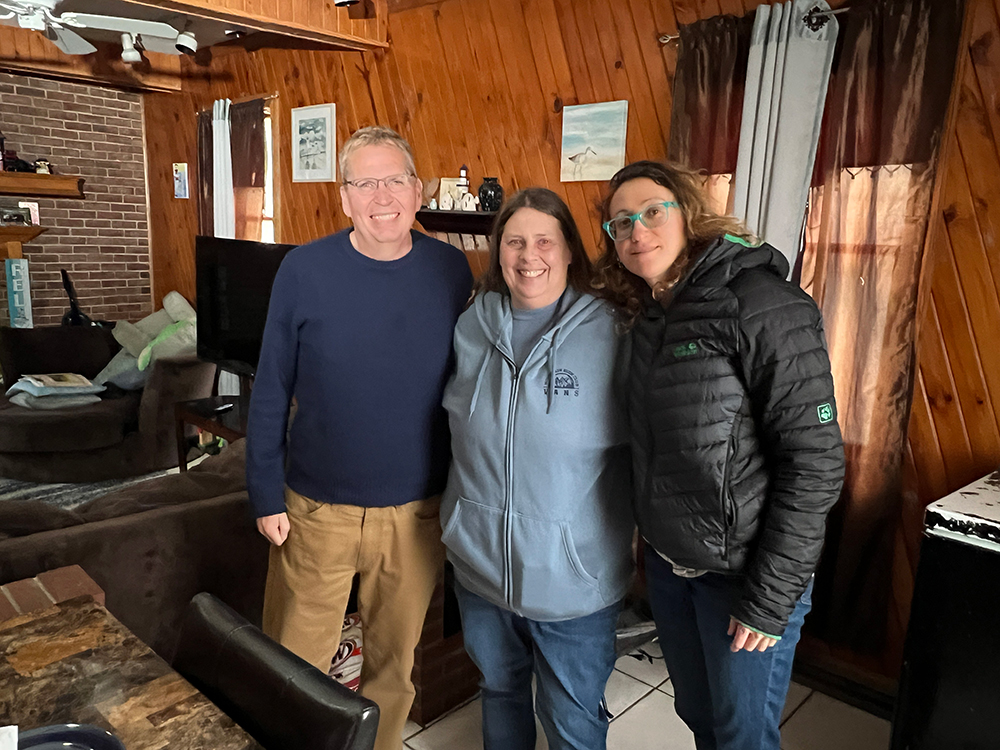
The History Project’s post caught the attention of Clark Williams, who was then living in San Jose, CA.
After dropping his daughter off at college, Clark went on a retreat at his vacation home near Yosemite National Park. After doing some self-reflection, he joined the Wisconsin LGBTQ History Project Facebook page, seeking survivors from his past life in Milwaukee.
“I was looking for anyone I might have grown up with,” said Clark, “and when I found one, he turned out to be dead. It was Billy Newton.”
Clark Williams felt a strong connection to Billy Newton, especially since they were born in the same week at the same hospital in Eau Claire.
“I couldn’t understand how I could not have known him, especially if he went to public school in Eau Claire,” said Clark. “I reached out to Rachel and said I could offer some context about his life.”
Clark was the first—and only—person to respond to the Wisconsin outreach. Through his research, he found that Billy’s obituary, which was written by his father, contained significant errors. It was the first of several curious discoveries Clark made.
“If the History Project hadn’t shared that story, which we will be screenshotting and putting into our film, we would never have met Clark,” said Rachel. “And this would still be a cold case.”
“It was such a strange, chaotic, and beautiful progression,” said Dion. “The podcast happens, Ron Wheeler comes forward, Jeffrey Dahmer is mentioned, we do all this Wisconsin media outreach, the Wisconsin LGBTQ History Project shares our story, and Clark steps in.”
Clark offered some hard advice: Revisiting Dahmer was not going to be easy.
“Clark told us to be careful because Dahmer still haunts Milwaukee,” said Dion. “There’s still a lot of trauma about those years, and you’re likely to trigger some ugly responses. He wasn’t convinced there was a Dahmer connection, and through his research, he proved that there wasn’t.”
“It has always bothered me that all anyone knows about Wisconsin gay history is Dahmer,” said Clark. “I didn’t want to resurrect that boogeyman. He has haunted Milwaukee for far too long.”
In the end, the Jeffrey Dahmer tip was a dead end.
“I believe that Ron Wheeler believes he saw Jeffrey Dahmer,” said Clark. “But I’m not convinced that person was really Jeffrey Dahmer.”
“Dahmer actually did a good deed for Billy,” said Christopher. “He brought together all of the people who could solve the crime.”
Cracking the Case
“There were two parts of my brain that were at work at the same time: One wanting to solve the murder, although I honestly didn’t think it was possible, and the other one wanting to make this film, just to memorialize Billy’s life story in the most dignified way as a tribute to this creative spirit lost,” said Rachel.
“As a filmmaker, I wanted to understand the journey Billy had to take, because he lived such a short life. Every single one of his 25 years mattered,” Rachel said. “And all I could access were the last five years. Suddenly, I was back to that moment with my dad in the basement, where he mentioned Wisconsin.”
“Clark scoured through all of the information Rachel gathered: All the leads, all the players, all the names,” said Dion. “He closely reviewed all the credits from all of Billy’s films. He cold-called more than 200 people. He was working more than 12 hours a day on the case.”
“I watched so much porn,” laughed Clark. “I cannot even tell you how much porn I watched. People made fun of me when I said I was only watching it for the credits!”
Clark noted the abundance of aliases used throughout the industry. Almost no one used their real name at work, and almost no one mentioned their alias in their obituaries. That trail led him back to Rick Paskay, a former business owner who later became a private investigator.
“At the time, Paskay tried ridiculously hard to cast suspicion towards Mark Rabins for reasons we still didn’t understand,” said Rachel.
“Through an interview with porn producer Kevin Clarke, Clark Williams learned that Rick wasn’t really a private eye at all. He was Richard Lawrence, a notorious producer of twink porn. This was the biggest break we’d made in the whole case.”
“We never knew that. The police never knew that. And as soon as we Googled Richard Lawrence, we found the film The Devil and Danny Webster, starring Billy Houston.”
Clark discovered that Billy Houston (aka Darryl Lynn Madden, aka DarraLynn Madden) was not only serving time in Oklahoma for homicide, but was featured in author David McConnell’s 2013 book American Honor Killings: Desire and Rage Among Men.
“McConnell and Madden were writing back and forth to each other for years,” said Dion. “Madden hinted that he’d committed other crimes in California. We knew he was in California at the time of this murder. And we knew that he’d strangled his other victims to death.”
While reading the McConnell book, Clark said he “almost fell out of bed.” In the book, Madden confessed to committing murders in LA while working in the gay porn industry. The information really scared Clark.
“Every single culprit I was researching had to pass certain litmus tests,” said Clark. “Were they in Los Angeles at the time? Were they within Billy Newton’s extended orbit? Did they have a criminal history? Did they commit similar crimes before or after this incident? Did they have the propensity to kill? Time has always been an obstacle for investigators,” Clark continued. “If a lot of time has passed, the assumption is that the crime will be harder to solve. My thought was, what if we see that as a positive rather than a negative? From what I know from social work, people don’t fundamentally change who they are. They may change their situation, their status, or their living conditions, but they are still essentially the same human being.
“So, if someone committed a similar murder 20 years later, and they’d known Billy, they had the same capacity and capability to have harmed Billy. But let’s be real, without DNA, most cold cases rarely get solved,” said Clark. “This case was kismet, really, that’s what it was. It was a total fluke that my first case turned out this way.”
Madden checked too many boxes: He’d been in Los Angeles at the time, he’d been in the adult film industry at the time, and he was in Billy Newton’s extended orbit. Most importantly, not only had he committed a murder, he specifically picked up, tortured, and murdered a gay man under false pretenses.
“Once I started to pull that together, I panicked,” said Clark. “I started to get scared, and this was the only time I had ever felt so scared. I told Rachel we had to get this to the Los Angeles Police Department.”
“I was hesitant to work with the LAPD,” said Clark, “because I didn’t want to come across as some amateur sleuth stirring up online hype about a cold case. That’s the last thing I wanted to do. I didn’t lean into innuendo; I didn’t pay attention to rumors. I was very, very diligent and careful in my research.”
Rachel shared the information with John Lamberti, and within hours, he called back. He said, “This is the biggest tip we’ve had in 30 years. We need to talk.”
Clark drove six hours to Los Angeles to meet with Rachel and John the next day. After reviewing the evidence, John and his partner agreed: They had to get to Oklahoma and speak to Madden.
“I shared a three-page profile of Madden, as well as a list of critical questions to ask. I knew everything about the Oklahoma case, including how detectives had successfully appealed to Madden and earned a confession. After 30 years of working in the mental health field, I knew that Madden was a dangerous sociopath as well as a violent predator. Knowing how to speak to Madden was essential to cracking this case,” said Clark.
In February 2023, the Los Angeles Police Department sent Detective John Lamberti to interview Madden.
Forty minutes into the visit, Madden confessed to Billy’s murder.
“I got to tell you: It was one of the most moving moments of my career as a police officer,” said Lamberti. “It was something else. It’s hard to put into words.”
“John texted me right before he went in, and right after he walked out,” said Rachel. “These were two of the most extraordinary text messages I’ve ever received.”
“When we got a call from the prison, we weren’t expecting good news,” said Clark, “so obviously this was an overwhelming and powerful moment. I realized, wow, we did this. We really did this.”
“I immediately told them to call Mark Rabins, because if there’s anyone who deserves a phone call today, it’s not me,” said Clark. “Liberate him. Free him from this burden. It has been so terribly unfair.”
“It all happened in this crazy avalanche,” said Dion. “One day, Rachel just texted me and said, ‘Clark solved the case.’ I was shocked. How was this even happening? Once I got over the disbelief, I was just so proud of Rachel. She wanted to make the film to raise awareness, but I know her ultimate goal was solving the crime. And against all the odds, she did it.”
“I was so proud of the role I’d played, and the new friends I had made, and the healing I had done in that year,” said Clark. “The investigation gave those gifts to my life. I came to really know and love Billy. He became just another one of my friends who died young.”
Who is DarraLynn Madden?
Darrell Lynn Madden was born in Washington, Oklahoma in 1970.
“We visited Madden’s hometown a few weeks after Rachel met with Newton’s sister in Ladysmith, Wisconsin,” said Dion. “Ladysmith was fresh in her mind. And when we pulled into Washington, Oklahoma, she said, ‘This is exactly like Ladysmith. It’s like the exact same town. These two came from almost the exact same place and wound up in totally separate places.’”
In 1990, Madden made his adult film debut as Billy Houston. Working for YMAC, he was known for his blue eyes, floppy brown hair, flirtatious smile, and his bisexual range. He’s best remembered for his scenes in The Devil and Danny Webster.
“It still gives me the creeps that this cute, brown-eyed guy who was so eager to help out with AIDS causes was the same guy who strangled another friend of mine,” said Mickey Skee. “I always thought Billy Houston was a bit creepy. He tried to look inside you, trying to read you, seeing how he could get to you. He seemed too eager to want to be in the industry, to be a superstar.”
Madden was a porn star by day, but hung out with violent skinheads by night. They’d go out and terrorize the sex workers on Santa Monica between La Brea and Highland.
“That night, their paths crossed with Newton,” said Dion. “Nobody can say just how. The story has changed a few times. Somewhere along Santa Monica between Fairfax and LaBrea, Madden and friends picked him up.”
Madden claims that they planned to rob Newton, but wound up strangling him to death. He also claimed he didn’t recognize him as a porn star, but that seems highly unlikely. To date, Madden has never revealed his accomplices, or the whereabouts of the body.
“I may be a murderer, but I’m not a snitch,” Madden told authorities.
But even though the case has been solved, there is still speculation flying around about many of the smaller details.
“We have so many questions about Paskay’s involvement that will never be answered,” said Christopher. “Was he in love with Houston? Was he manipulated or blackmailed by him? Was his studio used to dispose of the body?”
“It is hard for me to imagine that [Paskay] didn’t know that Billy Houston killed Billy London,” said director Kevin Clarke. “He never told police he worked in the industry, nor did he interview anyone working in the industry.”
“It’s too coincidental that Paskay’s bike shop was on the same alley where Billy’s body was found,” said Eric. “It’s comical to believe this man looked out his window, saw the police scoping out a crime scene, and stepped forward as this Good Samaritan to help the LAPD. This was a deflection. This was a cover story of its own. But why?”
After one last controversial film in 1994, “Billy Houston” left the industry. After being arrested for drug trafficking in California, Madden returned home to Oklahoma City, became a sex worker, and launched a decade-long crime spree that included burglary, animal cruelty, fraud, and impersonating a police officer.
He served time twice in Oklahoma, where he met Bradley Qualls. Madden claims he was recruited by the United Aryan Brotherhood, where he was initiated after killing a man, and later became a general. But there’s no evidence of any of these claims.
Madden later joined the Chaos Squad Skinheads. On October 26, 2007, Madden and Qualls kidnapped and murdered 27-year-old Steven Domer in Oklahoma City. Twelve days later, Madden shot and killed Qualls after an argument in Ardmore, Oklahoma. Madden attempted to flee the crime scene, but after failing to carjack a vehicle, he was shot and captured by police.
On November 9, 2007, Madden was charged with first-degree murder and five counts of assault and battery. He was incredibly violent throughout his first year in custody.
Madden pled guilty and was convicted of both murders. They received a lifetime prison sentence for the Qualls murder and four life sentences for the Domer murder. They will never be eligible for parole under Oklahoma law, which requires 85% of the sentence to be served.
While in prison, Madden transitioned and now identifies as DarraLynn, an Orthodox Jewish woman still sporting visible swastika, skinhead, and Satanic tattoos from their past life.
Over the years, Rachel developed a relationship with Madden through handwritten letters, phone, and video calls. Madden was originally sentenced to Davis Correctional Facility, a medium-security prison in Holdenville, Oklahoma, before being transferred to the maximum-security Oklahoma State Penitentiary in McAlester. After years of communication, Rachel was able to schedule an in-person interview for the documentary.
“Rachel could teach a class on how to get people on your side,” said Dion. “She said, ‘We have to go to Oklahoma. We have two weeks.’ And there was always the risk that they’d cancel the interview at any moment if Madden misbehaved.
“We were given one hour to set up and one hour to interview Madden,” said Dion. “When we got there, Madden refused to comply with a strip search. After half an hour, we started to think we’d have to pack it up and go home. But Rachel said, ‘Nope, I’m not giving up. I’m not leaving without this interview.’
“Finally, Madden agreed to come down,” Dion said, “and we came face to face with a killer.”
A Strange Sort of Justice
Despite the confession, Madden was, and will never be, prosecuted for Billy Newton’s murder. They are serving a combined five life sentences, and unlikely to ever leave prison, so the State of Oklahoma did not find a sixth sentence necessary.
“Frankly, I was pissed about it,” said Clark. “While I feel like Billy deserves a verdict, and the family wanted one, too, we’re going to have to live with this outcome. Justice doesn’t always come with prosecution.”
For 32 years, Billy Newton was only a distant memory, and if he was remembered at all, he was known as the gay porn star found in a dumpster. He had become a cautionary tale for every young gay man who goes to LA to become famous. Now, his real story can finally be seen.
“The stigma around sex work really hindered this investigation for decades,” said Christopher. “Stigma has allowed killers to get away with murder since Jack the Ripper. Stigma allows killers to kill. Stigma allows accomplices to keep their identities secret. Stigma keeps the people who can solve crimes from getting together and comparing notes. When you remove that stigma, the truth becomes much more clear.”
“Billy was the victim of a hate crime,” said Clark. “That fate was no fault of his own. He is no different from Matthew Shepherd in that respect. Yet nowadays, everyone knows who Matthew was, but nobody knows who Billy was. And Billy is only one of many, many young men killed in the 70s, 80s, and 90s who weren’t seen as innocent victims because of how they lived their lives.
“It angers me that stories are never told through the eyes of the victims,” said Clark. “It always gets told through the eyes of the predator, which tends to sensationalize and even glamorize the crime. I hate that.”
“This was an open wound for West Hollywood for far too long,” said Dion. “That was the worst day of his life, and no murder victim deserves to be known only for the worst day of their entire life. They deserve to be known for the life they lived, and Billy Newton had a full life with more life left to come. And that’s how I want him to be remembered.”
“It should never have taken this long,” said Chris Bull, “but it’s good to see there is some justice for Billy. I can’t take any credit for this case. I was just assigned a piece and collaborated with a great local researcher to write it. But I did believe, very much, in exposing these crimes, and The Advocate really supported me in that.
“I’d like to believe it’s harder to get away with murder today. I would like to believe that police take crimes against gay men as seriously as any other. I know there are enhanced penalties for hate crimes in most states,” Bull said. “And we now have the internet to educate us and social media to connect and mobilize people around crimes as they happen. But I also know that gay men are still targets, and the escalating hate crime statistics show that.”
What Happens Now?
Rachel and Dion produced the film completely independently and are planning to premiere it at festivals in 2026.
“I am hoping this documentary reveals to audiences that Billy was a victim,” said Clark. “That his life was taken from him through no fault of his own. That he was in the wrong place at the wrong time where the wrong people found him. That could happen to anyone. Even now.”
“This case shows us that the internet is not all bad,” said Eric. “The internet allows us to come together and seek justice for victims who were forgotten by the system. No matter who you are, or where you are, you can use your platform as a force for good.”
“This story shows a community’s commitment to finding justice,” said Rachel. “So many people cared about Billy and weren’t willing to let his death just go unsolved. It’s moving to know Clark now is working to solve more cases. It’s a testament to what Billy inspired.”
Donations to support Rachel Mason’s documentary are gladly accepted online.
Meet the Players
Clark Williams: Clark is a husband, father, retired social worker and volunteer cold-case investigator living in Sherman Oaks, California. Clark was born and raised in Eau Claire and attended NYU graduate school.
Rachel Mason: Rachel is an artist, musician, and filmmaker, whose award-winning Netflix documentary Circus of Books chronicled her family’s legacy in the Los Angeles LGBTQ+ community. Rachel lives in Los Angeles with her partner, Buck Angel, and her son.
Dion Labriola: Born and raised in Akron, Ohio, Dion joined the Art Institute of Chicago just as the video boom hit. He worked at Berlin, Chicago’s premier video bar, for 13 years before pursuing an animation career in Los Angeles. In 2023, Dion released Dear Ike: Letters to a Teen Idol, revisiting his childhood obsession with ‘70s star Ike Eisenmann.









Thank you for profiling the life of Billy Newton. Though Billy was murdered 35 years ago, his life reflects the lives of so many of my friends from rural Wisconsin – many who never survived to enjoy the progress of the LGBTQ civil rights movement. Billy’s life mattered and I’m thrilled to see his story being told. May he forever rest in peace.